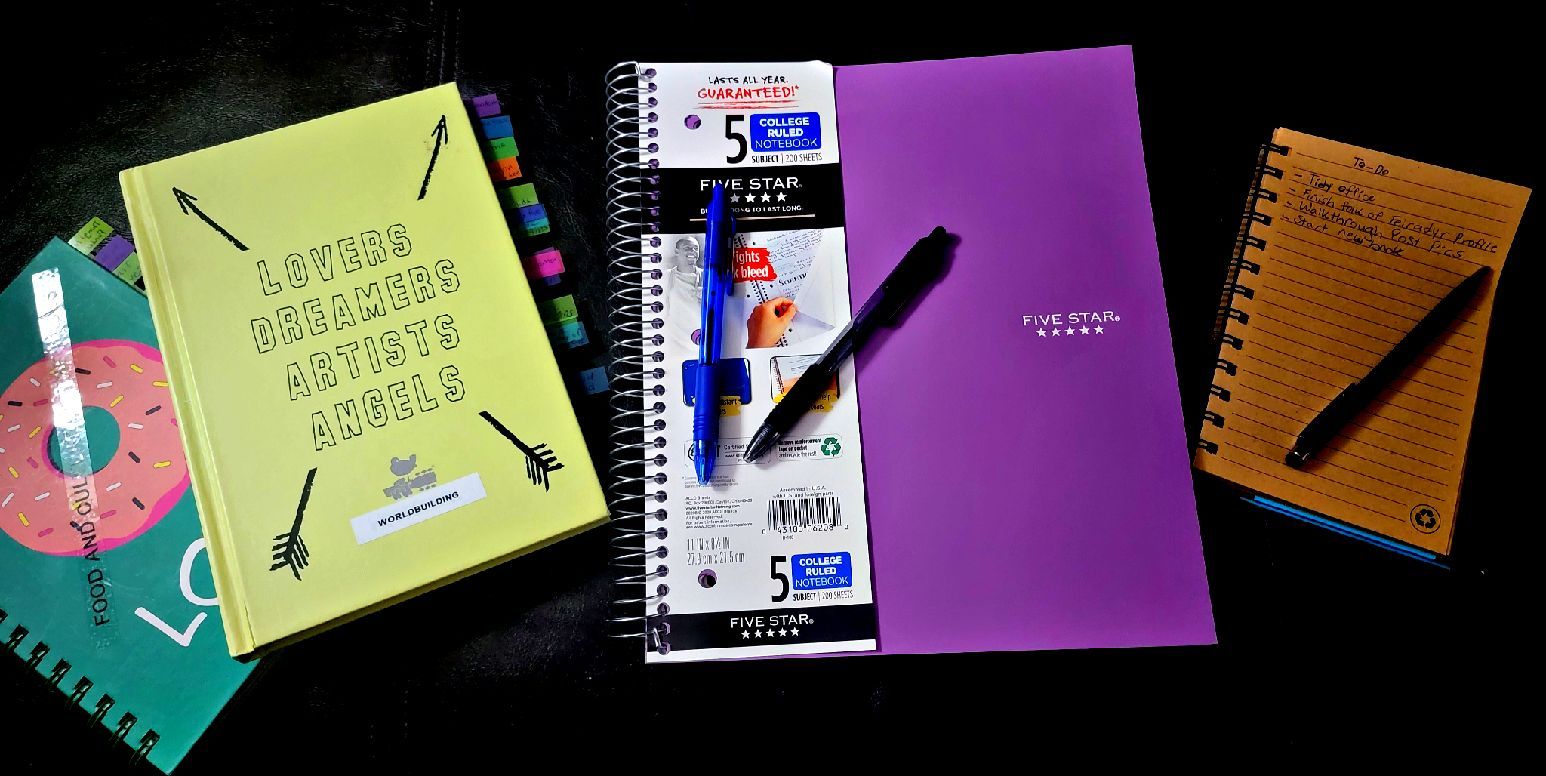
School was the worst part of my childhood, but I would be remiss if I didn’t admit it was the perfect setup for me to hone my writing. Being forced to sit in a well-lit room filled with notebooks and writing utensils for 8 hours a day meant that for about 5 years of my life, I wrote for around 6 hours a day every single day.
One of the things I struggled with most after I got out of school was finding that rigidity and structure again, and realizing that writing was so much more to me than just an outlet for my boredom and the result of stifled creativity.
It’s like oxygen to me. And when I don’t do it for some time, my mental health suffers. My head fills up with ideas and threatens to explode from the pressure. My heart races. I get anxious.
And so it was incredibly important for me to come up with a kind of structure and routine to keep my writing consistent and easy to tap into. I have several little things I do, and quite a few big things, to ensure this happens. So, I figured I would share them with you in the hopes they might help you too.
1.) I keep notebooks and writing utensils everywhere (yes really)
I would literally write on anything. A few of my more creative stationary choices include scraps of paper torn off my homework, index cards, printing labels from my job, quality check tags from the same place, my arm, folders, and Kleenex. I always joke that if I had to carve my books into a freaking stone tablet I still would. I’d carve stories into my skin before I never wrote again.
As you may have guessed, a lot of these choices were imperfect. Easily lost, smudged, and torn. I’ve lost a lot of random thoughts over the years. And because my memory is exquisite when it comes to something I’ve written on, I’d usually remember where I had written about something even if I couldn’t remember exactly what I’d written. Which in turn led to a lot of anxiety and stress when I would inevitably lose pieces of my writing and the existential dread of perhaps having lost an idea forever in the recesses of my brain would rear its ugly head.
Thus as I’ve gotten older, places for me to pour my soul onto the page exist pretty much everywhere. Next to my bed, my spot on the couch, in my office, in my luggage for travel, in my purse, in the car… and of course, the almost 400 notes on my phone. The biggest reason why I almost never have ideas “just slip away” is because I always have a way to record them. Yes, even in the shower.
2.) I try and stay organized (whatever organized means for me at the moment)
If you’ve been reading here awhile, you’ve probably seen my cubby of alphabetized folders that contain all my different story ideas organized in one place.
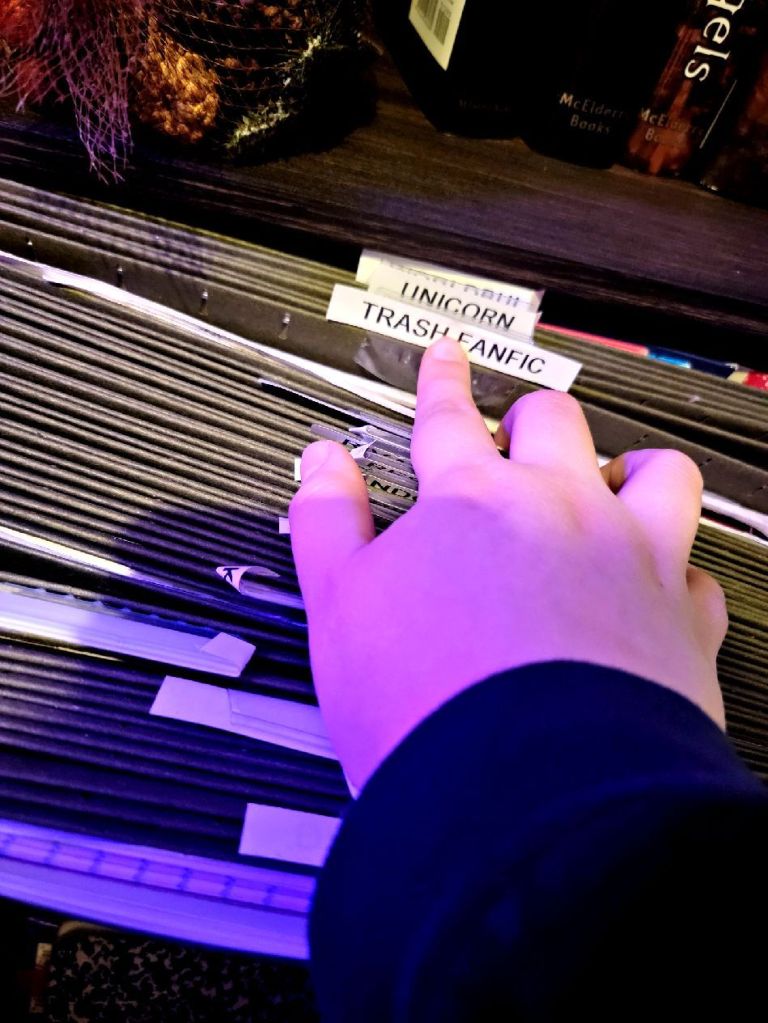
I’ve also got notebooks labeled with what’s inside them, and binders when I decide to actually turn an idea into a proper book.

If you want to see what the process of me starting a new book is like, check out my post on it if you’d like!
The purpose of all of these things is to keep myself organized. Since I have a lot of ideas and write a lot, I inevitably used to misplace things, which would lead to frustration and was just another roadblock to writing. That happens to me rarely now because I keep everything in one place, labeled, alphabetized, and organized.
But I couldn’t always do that, and at the end of the day any type of organization is likely going to help. Having a flash drive, keeping all your notebooks together, typing things from your notebooks up into a Word document, keeping a dedicated journal, etc. are all great ways to stay organized!
3.) I write down my dreams (because those bad boys are chock full of story ideas)
Mary Shelley’s Frankenstein, Stephen King’s Misery, Stephenie Meyer’s Twilight. What do all of these works have in common? They were all inspired by dreams! There are a lot of famous works that were thought up in the land of sleep, which is why any dream I find marginally interesting, I write down. At least 3 of my different book ideas have come from dreams. Some people don’t remember their dreams, which is understandable and may make this tip null and void. My husband dreams often but he only remembers vibes and there isn’t anything concrete. Some people don’t even dream at all. But the majority of dreams don’t stick in the mind long for people, even those who remember their dreams very vividly, like me.
And so when I wake up and remember a dream I write down every detail and tuck it away into my cubby of ideas for a rainy day. I can use dream ideas for everything from just general vibes, all the way up to pretty much a 1:1 ratio depending on how unhinged the dream is. They also make great starting points for more general ideas. You can take a dream and build on it, twist it, shape it into what you want. Bounce ideas off other people, have them put their own thoughts into it. The possibilities are endless!
4.) I make sure I stay hydrated (especially while writing)
Have you had your water today? No really, DRINK WATER right now. It’s no secret that humans are made up of anywhere from 70-80% water (depending on your source). But it isn’t talked about nearly as much how much water boosts your brain’s ability to function. Cognitive function is directly impacted by how hydrated we are, and I for one have noticed that when I’m dehydrated, my ability to write takes a big hit. In fact, dehydration takes a metal baseball bat to the kneecaps of my creative process, so when I’m preparing my writing setup, a tumbler of water right in my line of sight is always the first thing I get ready. It also gives you an excuse to stretch your legs and refill your water when you need to, which is a nice break during writing marathons, and something I’ll talk about later in this post.
5.) I eat well (with an emphasis on healthy fats and protein when I’m planning on doing a big writing stint)
Just like water, fat and protein are important building blocks for the brain. In order for our brains to work, we need to fuel them. I never try and write before I’ve had breakfast, because chances are my neurons aren’t going to be able to fire hard enough to get anything meaningful on the page until I have. I can tell when I’m starting to get hungry because my brain power wanes and I can’t write as well and for as long. That’s the signal that it’s time to take a break and eat.
My primary focuses when I eat on days I’m planning on writing for multiple hours are several forms of healthy fats, moderate protein, and some carbs for energy that are easy to prepare and tasty.

Like this fabulous sheet-pan lunch I made the other day. This day I managed to get an entire chapter of my book done, and a blog post for the following week in a few hours. What you eat matters a lot more than you’d think when it comes to productivity and success. It can be as simple as slicing up some potatoes, onions, and peppers and tossing with seasoning and olive oil, laying them out on a baking sheet and roasting, then adding your protein of choice (I used tuna steaks) and finishing with a nice bit of feta. Tuna is rich in omega 3-s and protein which fuel the brain. Olive oil and feta are two other forms of healthy fats, potatoes provide adequate energy, and some veggies add color and bulk to the meal. This meal also has minimal dishes thanks to the tin foil on the baking sheet, and if you add the oil and seasonings to the veggies on top of the foil instead of a bowl it has even less.
6.) I have multiple copies of anything I’m writing (flash drives, hard copies, and desktop versions, which offers the bonus of writing things down multiple times which helps cement them in my memory)
If you’ve been reading this blog for awhile you know I’m paranoid about my writing. House fires, floods, meteor strikes, PC death, corrupted files, all potential threats to my precious life’s work. Which is part of the reason why I have multiple flash drives with everything on them, multiple hard copies of anything I’m working on, multiple printed copies of typed books I’ve written, etc. But in this world of paranoia and mild mental unhinge, I have discovered that these methods actually lead to improved memory when it comes to my writing.
If you ever had a teacher that told you during note taking “writing it down helps you remember it” then you’ve seen this in action. It’s the same exact concept but done with our own writing. Reading what you’ve written, typing it up, and storing it on a hard drive or a pc or emailing it to yourself all can help you to remember what you’ve written, where you’ve put it, and it can even trigger your brain into coming up with where to take your writing next. You’re basically triggering your memory and inspiring yourself, all while creating extra copies of your work to keep safe in case you misplace or lose some of the other ones.
7.) I finish chores and other projects before I sit down to write for the day (so I can focus on it properly)
This one is definitely going to depend on how your brain works. If you’re the type of person who has to clean your whole house before you can relax in it, this tip will probably help you. But if you’re the type of person who prefers to relax first before you take the time to clean, you may want to disregard this.
But I find myself unable to focus all of my energy on writing if I’ve got things that need doing. So I prefer to finish my household chores and any errands I need to run before I sit down to write for the day.
However, if I’m doing something that’s going to require large swaths of emotional or social energy, like going to a party or going out to dinner with family, sometimes I try to get a bit of writing done beforehand because I know I’ll be too mentally exhausted when I get home.
8.) I keep multiple forms of writing at my fingertips at all times (so I can bounce back and forth to what interests me but keep writing fresh)
Right now my two primary writing projects are this blog and my new book. If you haven’t heard, I’m writing a brand new novel. If apocalyptic zombie fiction is your bag, stick around, because I’m going to be talking about it in the future.
My second ever post on this blog was called “What Inspires Me and Why?” and number 10 on the list of things that I gave as possible ways to get your inspiration flowing was trying out writing in a different form than you’re used to.
This could mean different things based on what kinds of writing you engage in. If you’re predominantly a fanfiction writer, try writing something all your own. If you blog, give creative writing a try. If you mostly just journal, consider starting a blog where you discuss any number of things and other people can read it. If you write novels, try out a different genre.
Basically what I’m going for here is putting multiple targets all over a field for myself to hit. I might wake up and not feel like writing my book, but I feel inspired to finish a blog post, like I do today. I’m still getting some writing done. It doesn’t have to be a specific type. Any kind of hands on keyboard or pencil on paper word creating action is a big win in my mind. I tend to go in cycles of multiple days where I prefer to engage in one form of writing and then switch, but sometimes I manage to do a bit of both in one day.
9.) I tested writing at different times of the day (and monitored my success, ability, and productivity)
I don’t know if it’s the same for everyone, but I have times of the day where I’m more productive in writing. Typically about 3pm to 8pm are my most productive hours. While it’s not impossible for me to write earlier than that, those are the hours when I’m at my most golden when it comes to speed, quality, and overall fruitfulness.
Not everyone can test multiple times of the day to write. Most people are probably stuck writing when they have time which is typically the same time of day every day due to their responsibilities, so this tip probably won’t resonate with everyone. But if you’re able to write at different times of the day and see where you are most creatively blessed and maneuver your schedule around those times, it can be a boon to your writing capabilities.
10.) I do hard core writing stints and then take frequent breaks (so that I don’t tire myself out and I can refuel and make sure I stay hydrated)
Once again, school comes back to haunt me with another of the very scant lessons it taught me. While most of my teachers did the brain rotting practice of “look at this slideshow and take notes on it” or “let me talk about a thing for 30 minutes and then you can do this worksheet for the rest of class” I had one teacher in high school who took a different approach. He masterfully wove teaching through talking with funny and interesting stories about his own life, or things he’d witnessed or read or saw. And he also encouraged frequent breaks. 5-10 minutes of talking about the subject, 5-10 minutes of stories or laughter, followed by another 5-10 minutes of the subject, and then we would complete a worksheet to ensure we had learned the material. And if we didn’t, he’d work with people 1 on 1. After we were done with our work we were free to do whatever we wanted (usually watching his various antics like dancing or storytelling.)
It was a game changer for me, and I learned the art of hard core work followed by hard core breaks. It’s an art I engage in now, and has been one of the biggest keys to success in my writing.
I’m sure you’ve heard of writing sprints, which is where you set a word count goal and focus on quantity in writing by setting a timer and trying to crank out as many words as possible in a set amount of time. While I don’t think this method is necessarily bad, I tweak it a little to fit my own brain.
Instead of setting a timer or a word count goal, I simply think and plan and imagine my next scene of a book, and then I sit down and I write for as long as the words come to me. When my speed and productivity start to wane, I take a break. I get up from my desk, do some stretches, drink some water, have a snack or meal, and play on my phone for a bit or do something else that I consider a break. Watching an episode of a tv show or reading a chapter of a book or playing a video game are all good ones too. These frequent breaks help me avoid burnout, let me think up what scene I’m going to write next, and keep my physical body from taking a beating by sitting for wayyy too long. Sometimes these breaks come every other hour, and sometimes they come every several hours, depending on how productive I am that day.
If you’re the type of person who really sinks into their work and doesn’t allow themselves breaks, sometimes setting a timer really helps. Another pro tip is if you’re really in the middle of something but you’ve been writing for hours and need to eat or stretch, just typing up a few quick bullet points detailing what you want to write for the rest of the scene or good lines you have for it is a good way to not lose your mojo but still allow yourself a break.
11.) I take longer breaks (if my brain feels especially fried)
This is another break focused one, but it’s more than just a quick stretch and a bite to eat. If I genuinely feel burnt out, or if I sit down and just can’t think of a single word to churn onto the page, I take a break from writing.
These times are rare for me, because writing is such a big part of my life and I’m really not a person who likes being out of their routine. But they do happen, and even though it starts to drag me down after awhile, sometimes taking a break from writing is needed. Your brain gets exhausted and worn down, and it can require rest. Taking a step away allows you to refresh and regroup, and find new ways to get inspired and ready to write again.
Woo, this was a long one today! If you made it all the way to the end, thank you so much! I’m so thankful for everyone who reads here and enjoys the blog. I have been so inspired since coming back and I have so many posts in the drafts to work on for you guys. Some upcoming stuff to get excited about includes info on my new zombie fiction book, a discussion on planning/plotting vs. pantsing writing styles, and a media discussion of the book series turned tv show Shadow and Bone, specifically season 2 which I did NOT like for reasons I’ll get into in the post.
If any of that interests you, please stay tuned! And thank you again for your support!
Happy writing!
 Writing My World
It never stops fascinating me, your process. Thank you for sharing it with us!
LikeLiked by 1 person
You are very welcome! ❤
LikeLike